
Have you ever get a bootie slipper, but after a short wear, It is break!
The top stitching problems for bootie slippers are
1. Low Stitching Density (< 6 times Per Inch)
2. Loose Stitching Between Upper and Sole
3. Stitching Breakage (< 6 Strands Per Stitching)
4. Stitching Joint Disconnection
5. Double Stitching at same place
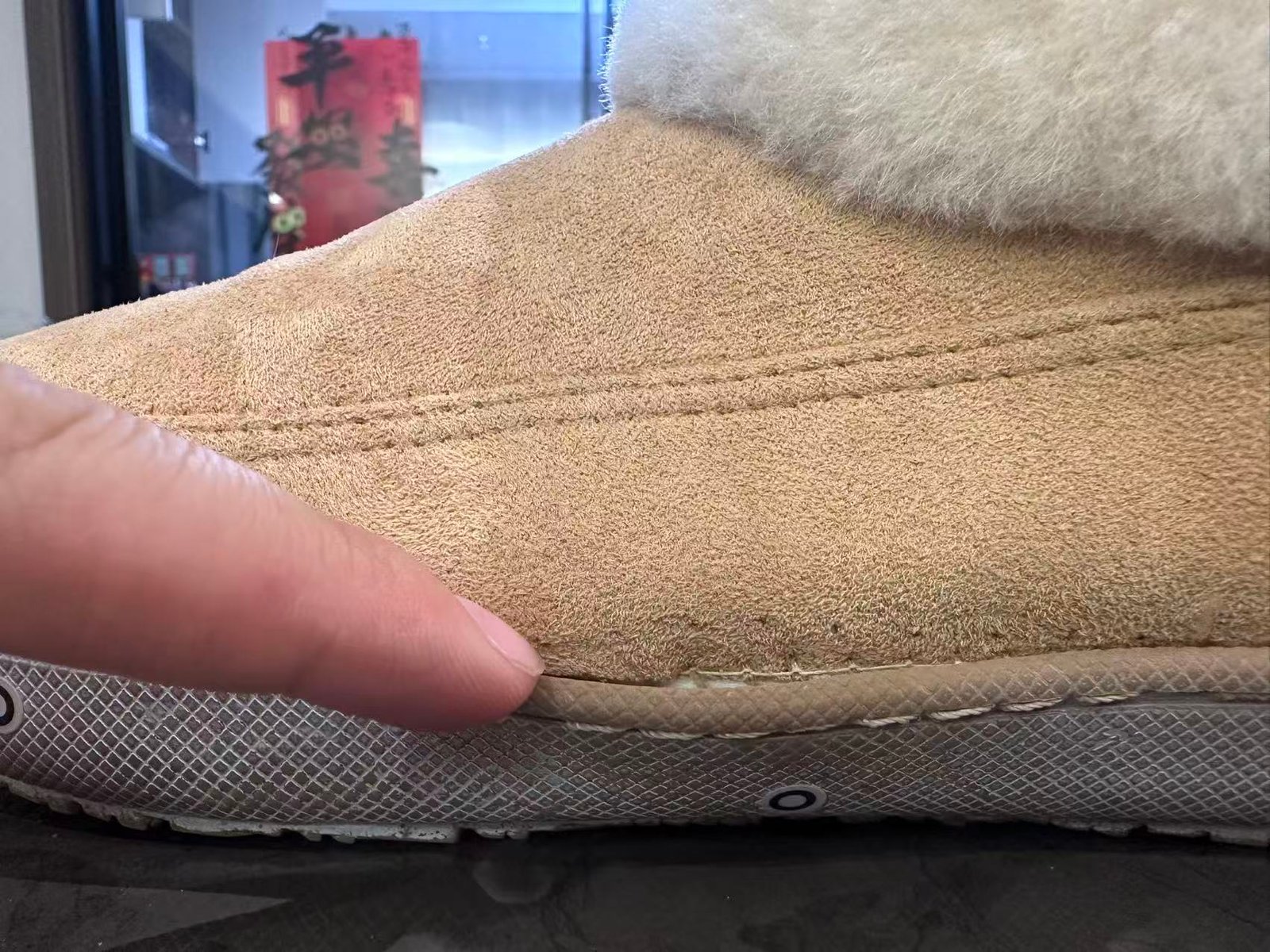
5 Common Stitching Problems
Problem 1 – low stitching density (< 6 times per Iinch)
* basic slippers – 4 or 5 stitching per inch
At 95% of Chinese factories, the salary is based on how many pairs worker stitch, not how long they work.
So it is faster if only 4/5 stitching per inch, which means worker can earn more.
Obviously, the low density will cause more risks for loose stitching.
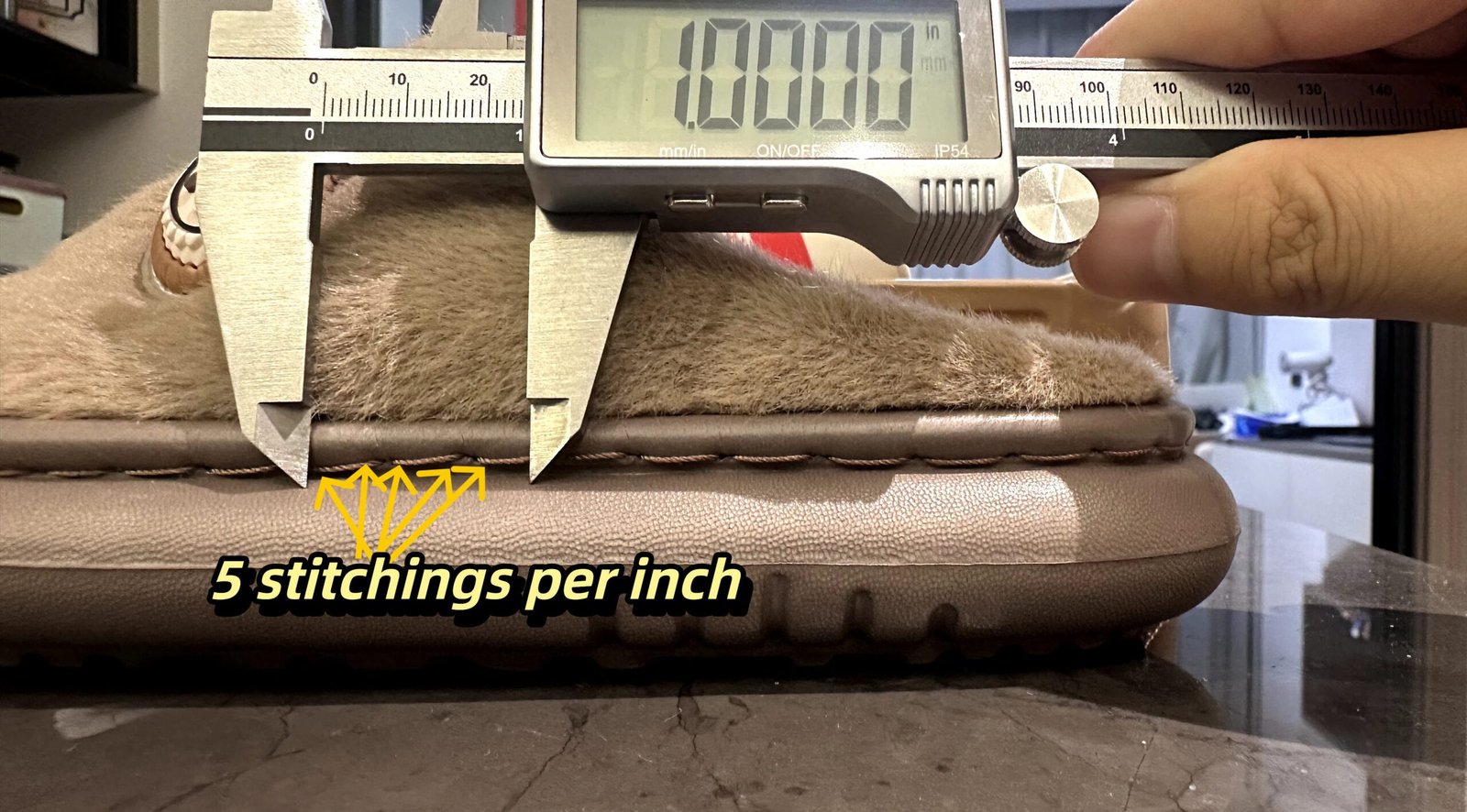
It will keep the stitching very tight on the TPR or EVA sole.
When customers walk on the road or bend to pick up something, the stitching won’t come loose.
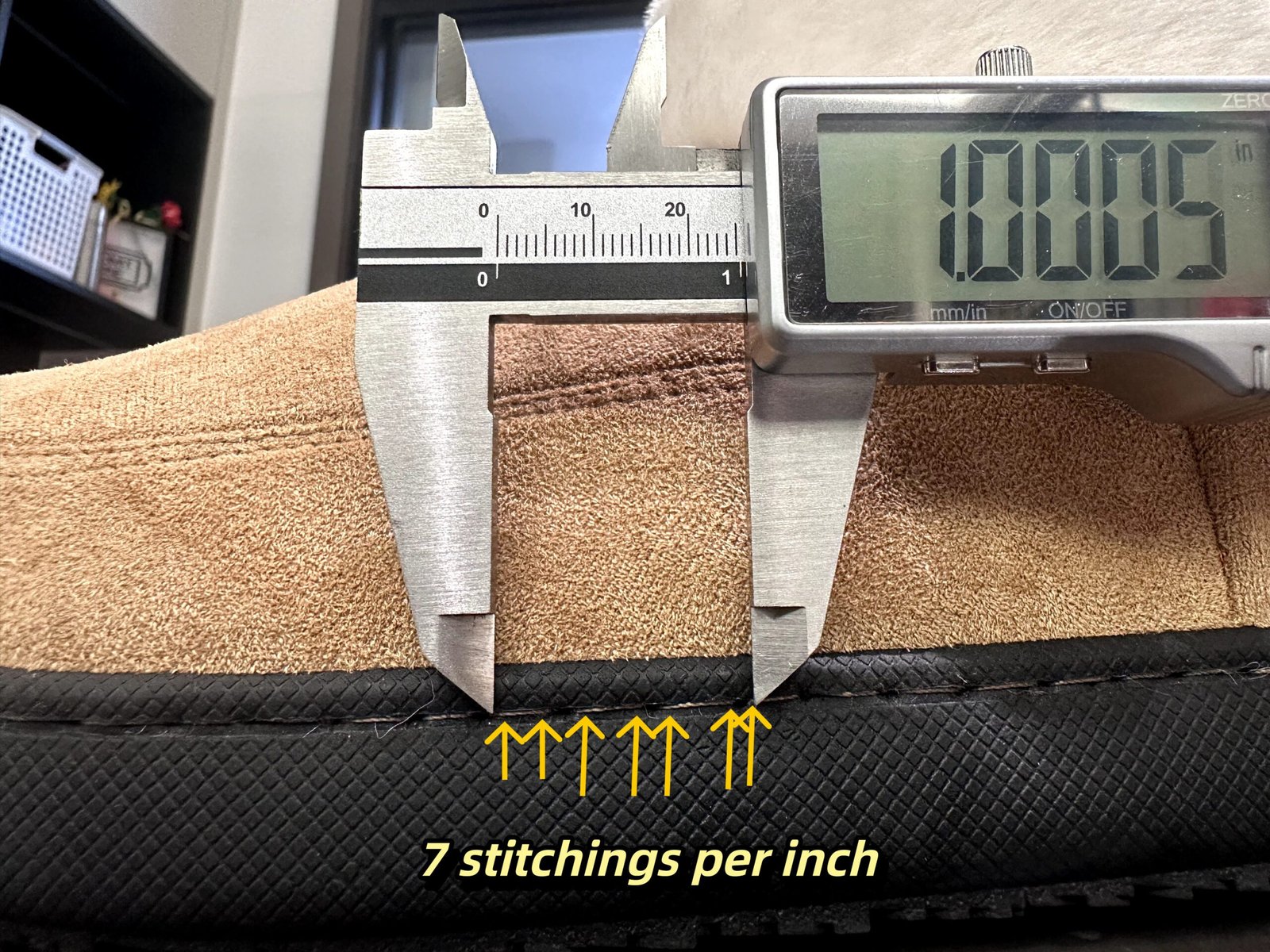
* no more than 8 stitching per inch
Although higher density will reduce customer complaint, especially for womens bootie slippers.
But if more than 8 SPI, the stitching points next to each other are too close.
When the sole is bended, the extremely tight stitching, will cause a high force between each stitching point.
Finally cause the break of the sole.
Problem 2 – loose stitching between upper and sole
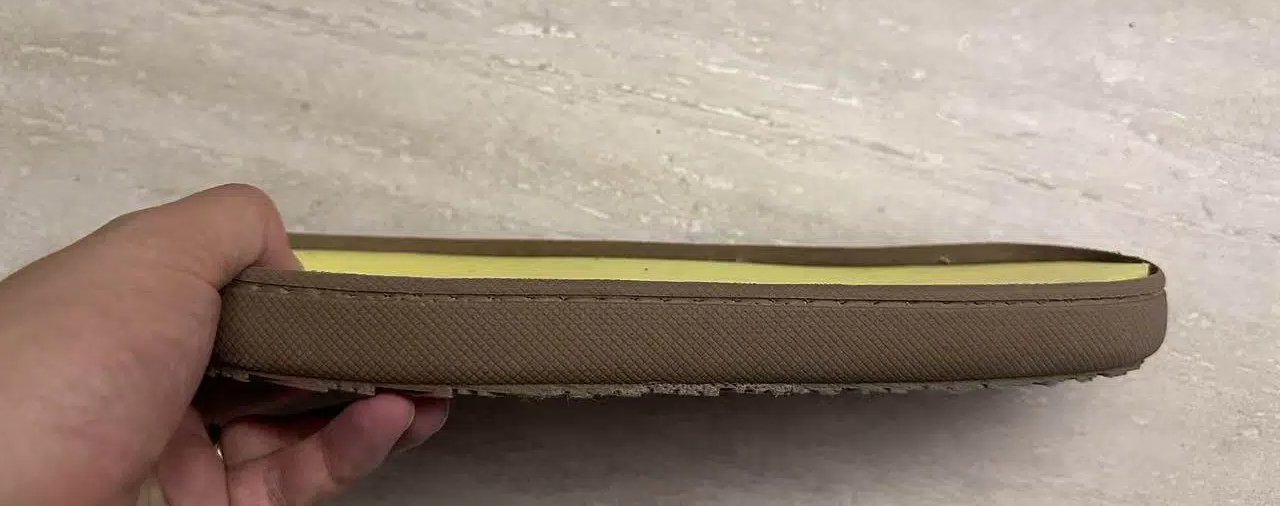
When workers press the upper into sole, the thick memory foam has high resilience.
They prevents the upper from going deep enough into the sole.
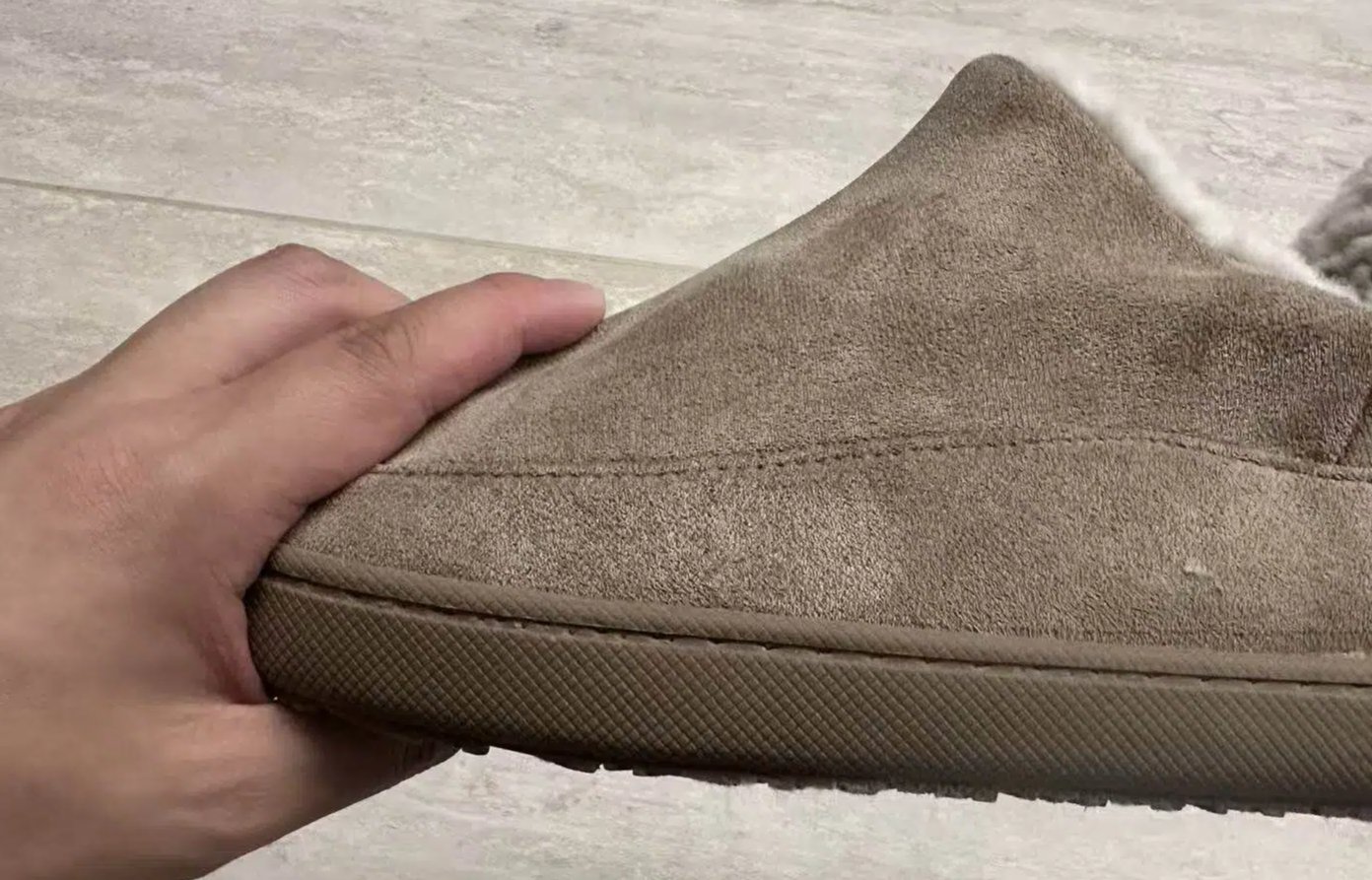
If worker not press with more force, the stitching will be very close to the bottom edge of the upper, or may only catch the fur.
Resulting in insufficient connection strength between the upper and sole.
The correct stitching point should be about 7–8mm above the bottom edge of the upper.
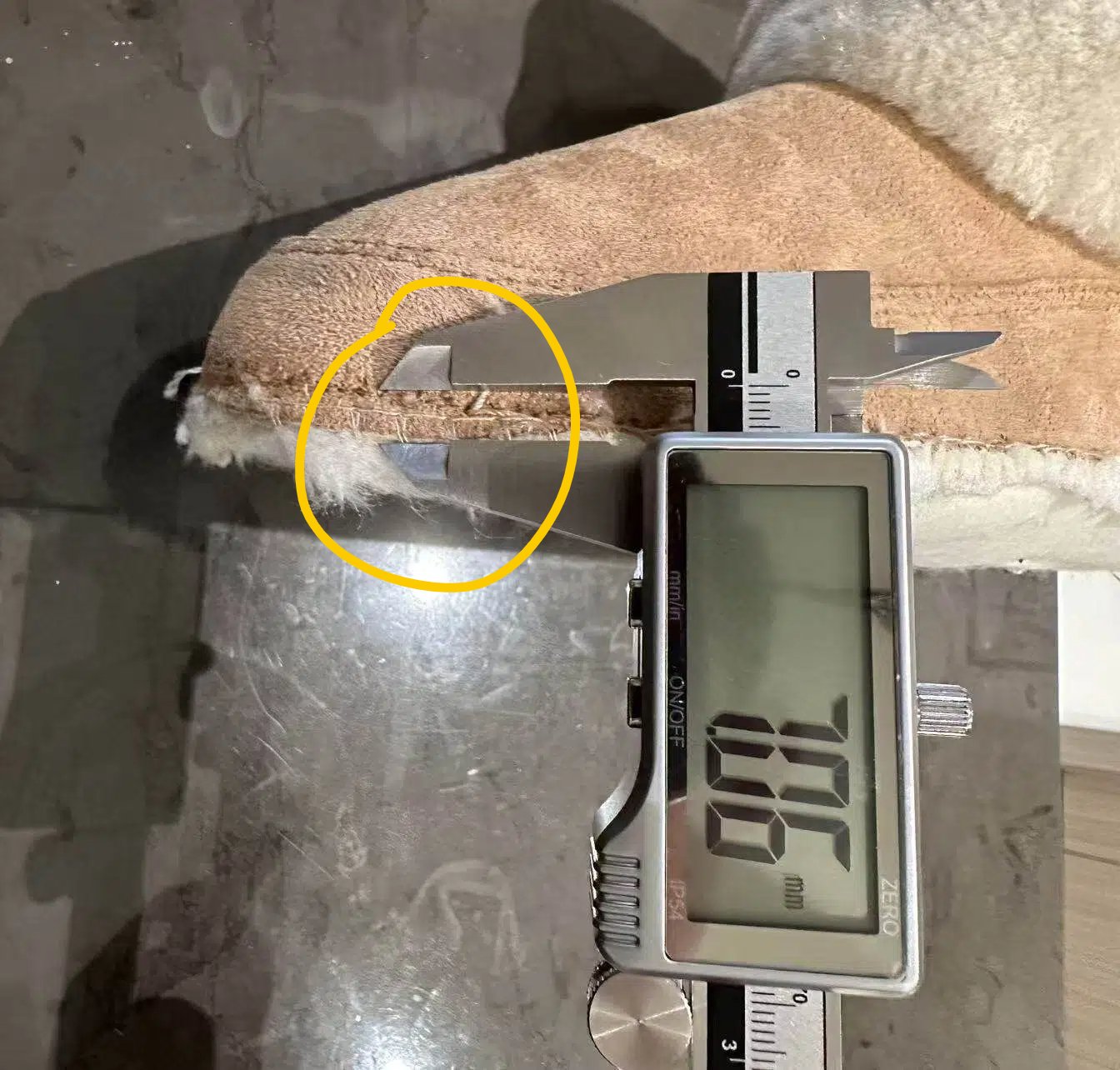
Step 1 – Put memory foam into sole and check height
Step 2 – Put upper into sole and press down
Problem 3 – Stitching Breakage (< 6 Strands Per Stitching)
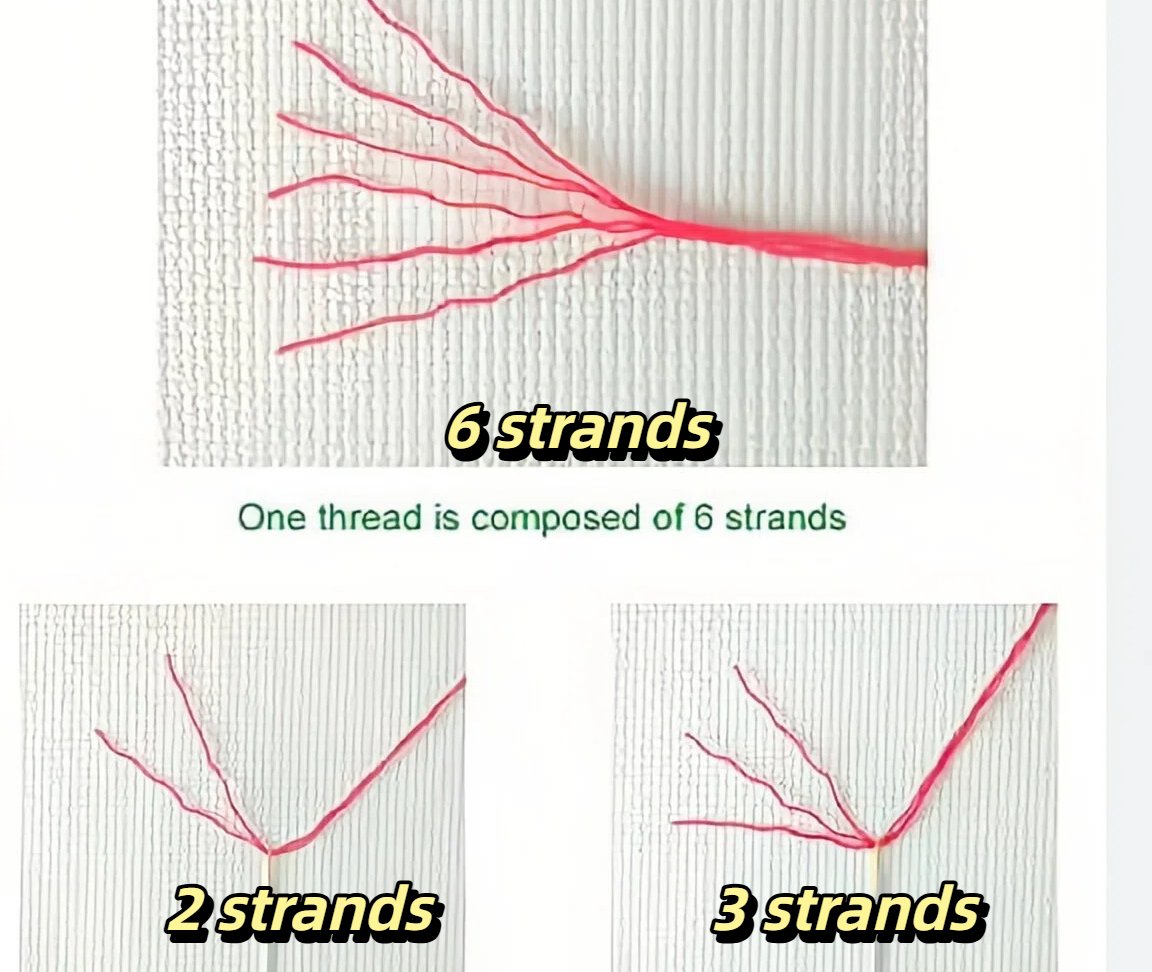
To save raw material cost (although very few in slipper unit price), and make mass production easier, supplier will use 3/4 strands stitching instead of 6 strands.
However, 3/4 strands stitching is much weaker than 6 strands stitching.
(Seems like the strength comparison between kids and adult).
When workers pull the stitch slightly tight during production, it is easier to break.
* Comparison between 3/4 strands and 6 strands
Problem 4 – Thread Joint Disconnection
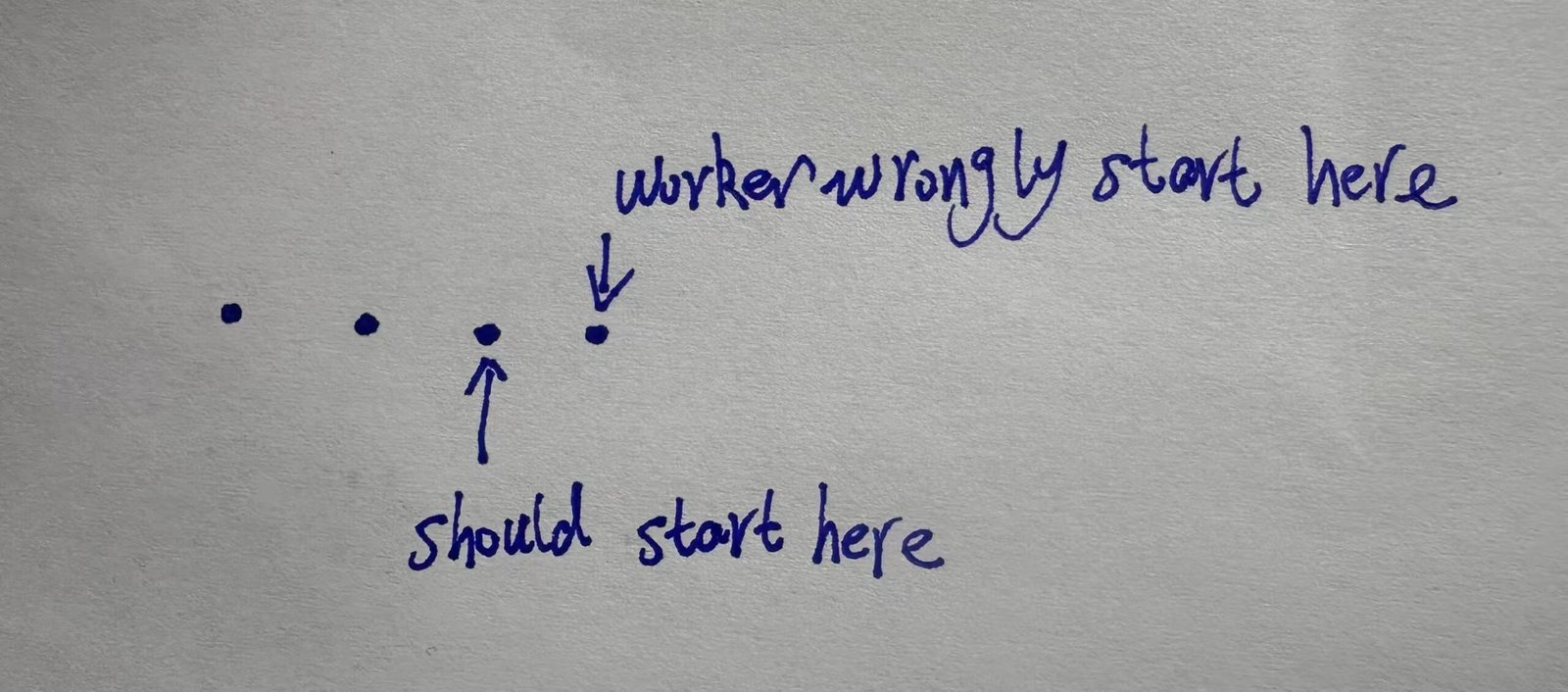
When the stitching breaks, or the thread runs out, the worker does not restart from the a bot back of previous ending point.
Instead, stitching is restarted further ahead, leaving a gap between the two stitching sections with no stitching connection
Problem 5 – Double Stitching at same place
When the thread runs out, some workers restart stitching from the same stitch point.
However, repeated punching at the same point can enlarge the stitch hole, reducing the stitch holding strength in that area.
Problem Summary
| Problem | Typical Cause | Risk |
|---|---|---|
| Low Stitching Density | 4–5 stitches per inch | Loose stitching |
| Seam opening | Stitch line too close to upper edge | Upper and sole separate |
| Thread breakage | 3–4 strand thread | Loss of seam strength |
| Thread Joint Disconnected | Poor restart after thread break | Hidden seam failure |
| Larger needle holes | Stitch twice at same place | Loosening and tearing |
5 Solutions to Improve Stitching
Solution 1 for Low Stitch Density (< 6 SPI)
* Use 6 SPI or 7 SPI
| Step | Content |
|---|---|
| 1 | Clearly specify in the SOP that stitching density must be 6–7 SPI. |
| 2 | Provide training to workers on the required stitching standard. |
| 3 | For each order, inspect the stitching performance of the first 100 pairs before mass production. |
| 4 | Mass production can only proceed if the first 100 pairs meet the required 6–7 SPI standard. |
* Test in third-party laboratory
- Prepare a pair of bootie slippers for women or mens bootie slippers
- Send samples to SGS/Intertek/BV, etc. for upper-to-sole seam strength testing
- The test method and sample quantity should be confirmed with the lab before testing
- Estimated cost: USD80-150 per test

Solution 2 for Loose Stitching Between Upper and Sole
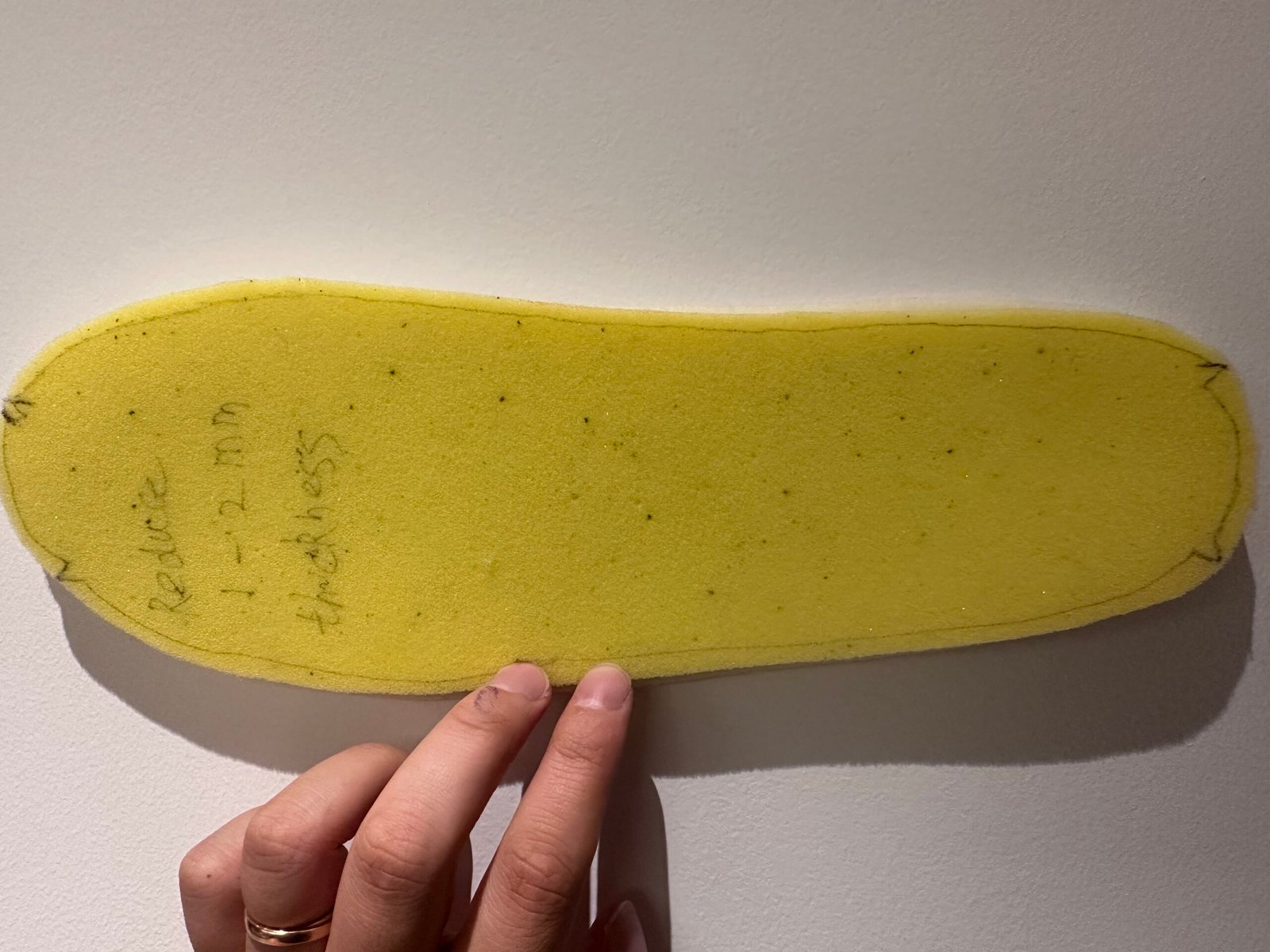
* Slightly Reduce the Outer Size of Memory Foam
Slightly reduce the outer edge of the memory foam to leave more space for upper insertion.
Design the four corners in a horn/ear shape and fix them to the sole, so the memory foam will not move during walking.
* Add marks on upper for stitching reference
Add alignment marks to the upper components during cutting. These marks provide clear reference points for stitching and assembly, helping workers position the components accurately and consistently.

Solution 3 for Stitch Breakage
* Must use 6 strands stitching
Solution 4 for Thread Joint Disconnection
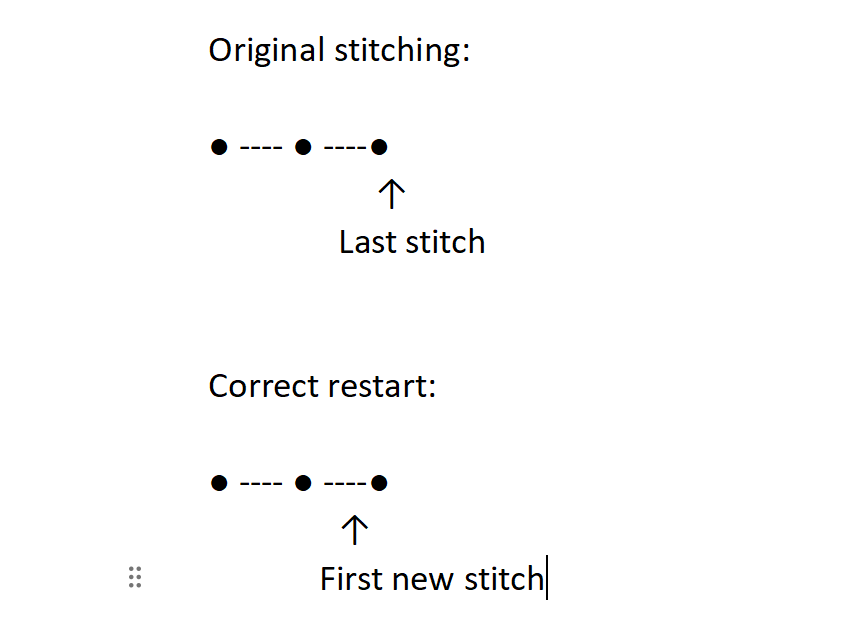
* Half-stitch overlap
When restarting stitching, place the first new stitch between the previous two stitch points rather than reusing an existing stitch hole.
Solution 5 for Double Stitching at same place
Internal evaluation for stitching area
| Pos. | Judegement | Content |
|---|---|---|
| 1 | Pass | Stitch holes are not obvious, and there is no visible damage to the sole. |
| 2 | Concession Accept | Stitch holes are visible but not obviously larger than the stitching thread diameter. The upper and sole remain tightly connected, with no looseness or separation. |
| 3 | Reject | Stitch holes are very obvious.When the upper and sole are pulled by hand, the stitching shows obvious looseness or separation. |
Case study
* customer background
This is a brand customer specializing in home slippers.
He contacted me in early 2025 and wanted to develop women’s bootie slippers and moccasin slippers.
* product introduction
- Women’s Bootie Slipper: TPR outsole + 5mm memory foam + 5mm high-elastic sponge + 2.5mm EVA.
- Men’s Bootie Slipper: TPR outsole + 5mm memory foam + 5mm high-elastic sponge + 2.5mm EVA.
* problem Analysis
The first batch of moccasin slippers did not receive any claims from retail stores or e-commerce platforms.
However, stitching issues were found on the women’s slippers.
Please see the customer feedback below.
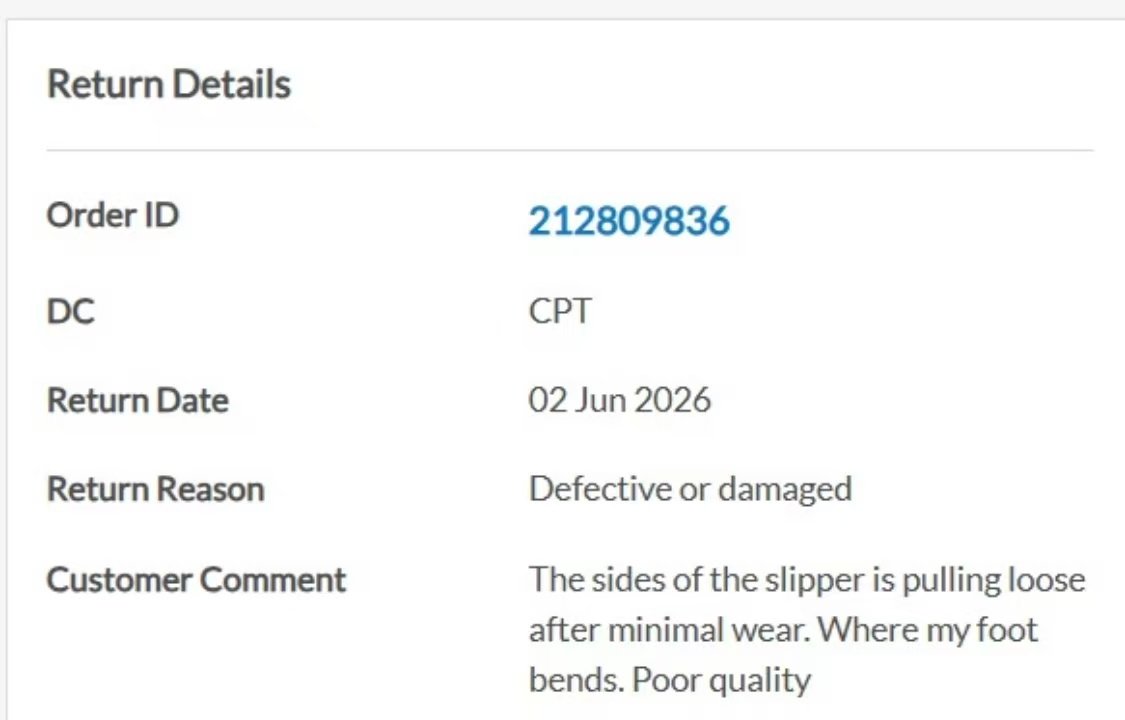
After internal analysis, the root cause was identified as insufficient upper insertion depth into the sole.
Some stitching points were only 3–4mm above the bottom edge of the upper, which is too low.
How it is solved
We use solution 2 and finally get approve by customers
- Slightly Reduce the Outer Size of Memory Foam
- Add marks on upper for stitching reference
Learn more bootie slipper styles and FAQ
If you would like to learn more about bootie slipper styles and FAQ, please visit https://evaslippers.com/bootie-slipper/
Or if you want to learn more about our company, please click here