
Worried about germs lurking in your slippers? It’s a common concern, especially if you wear them often. You want to keep your feet healthy and clean, right?
The right materials can definitely boost the antibacterial power of your slippers. This helps fight germs and keep your feet fresher.

So, how do you choose the best antibacterial slipper? Let’s explore some materials and their germ-fighting abilities.
What materials have antibacterial properties?
Are you curious about which materials naturally fight bacteria? It’s a great question, especially for things that touch your skin.
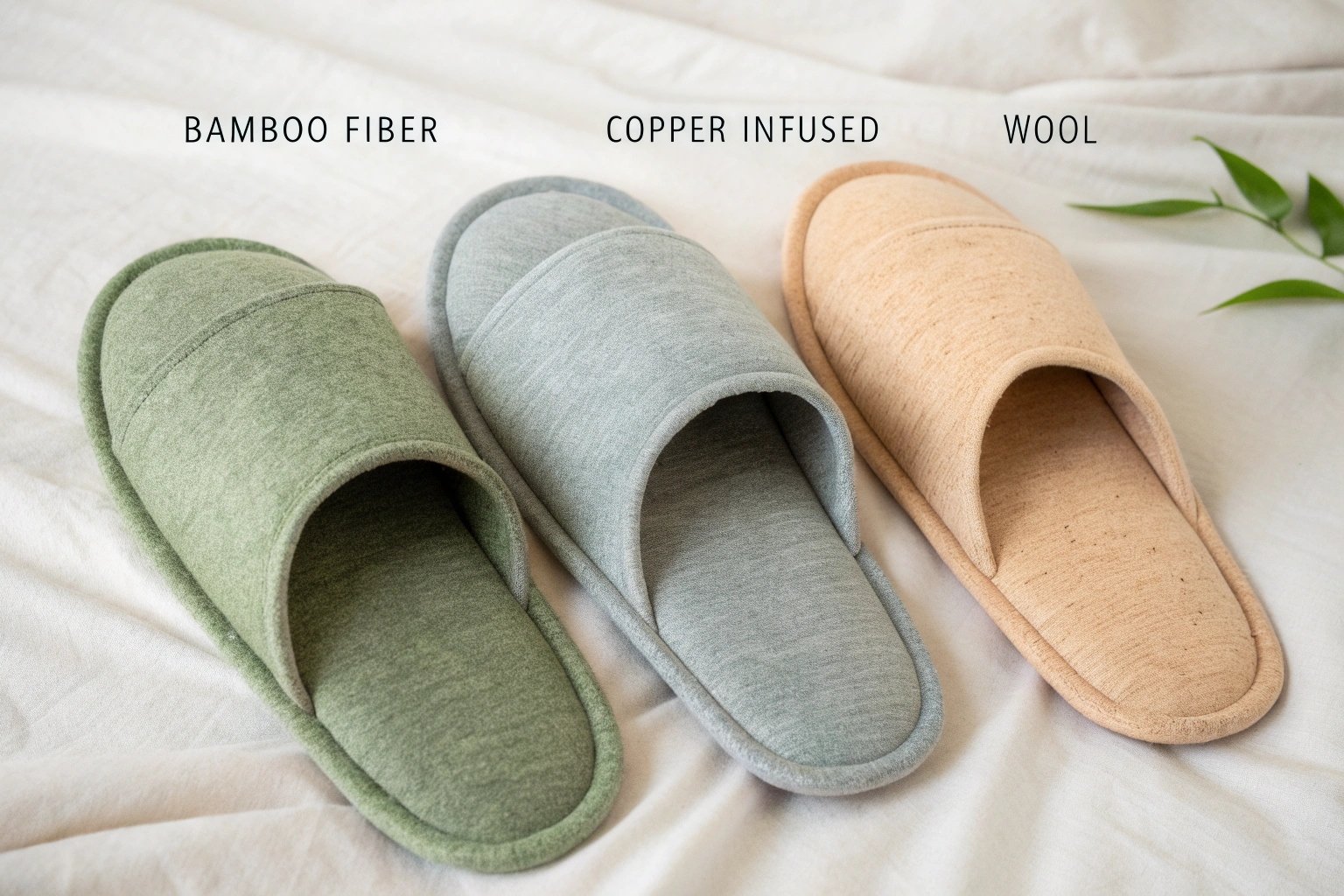
Several materials have natural antibacterial qualities. Some popular choices include bamboo, copper-infused fabrics, and certain types of wool.
Dive deeper:
When it comes to antibacterial materials, you have several options to consider for your slippers. Each material has its own strengths, weaknesses, and unique properties. For example, bamboo is known for its soft feel and breathability, but what makes it antibacterial? Copper-infused fabrics can be very effective, but how safe and durable are they? Wool is naturally moisture-wicking, but can it truly fight off bacteria? These are important questions to ask when selecting the right material for your needs. To make it simpler, here’s a breakdown:
| Material | Antibacterial Properties | Benefits | Considerations |
|---|---|---|---|
| Bamboo | Contains a natural agent called "bamboo kun" that inhibits bacterial growth. | Soft, breathable, sustainable, moisture-wicking. | Antibacterial properties may decrease after multiple washes. |
| Copper-Infused Fabrics | Copper ions disrupt bacterial cell function, preventing them from growing and multiplying. | Highly effective, long-lasting antibacterial action. | Can be more expensive, may cause skin irritation in some people. |
| Wool | Contains lanolin, which has antibacterial and antifungal properties. Naturally wicks away moisture, creating a less favorable environment for bacteria. | Warm, comfortable, naturally odor-resistant. | Some people are allergic to wool, requires proper care to maintain its properties. |
Choosing the right material depends on what you value most: comfort, effectiveness, sustainability, or price. Think about how often you’ll wear the slippers, what your feet need, and what kind of care you’re willing to give them.
Conclusion
Choosing slippers with antibacterial materials is smart. It helps keep your feet healthy and fresh.