
Abstract: Leveraging Trade Agreements to Protect Import Margins
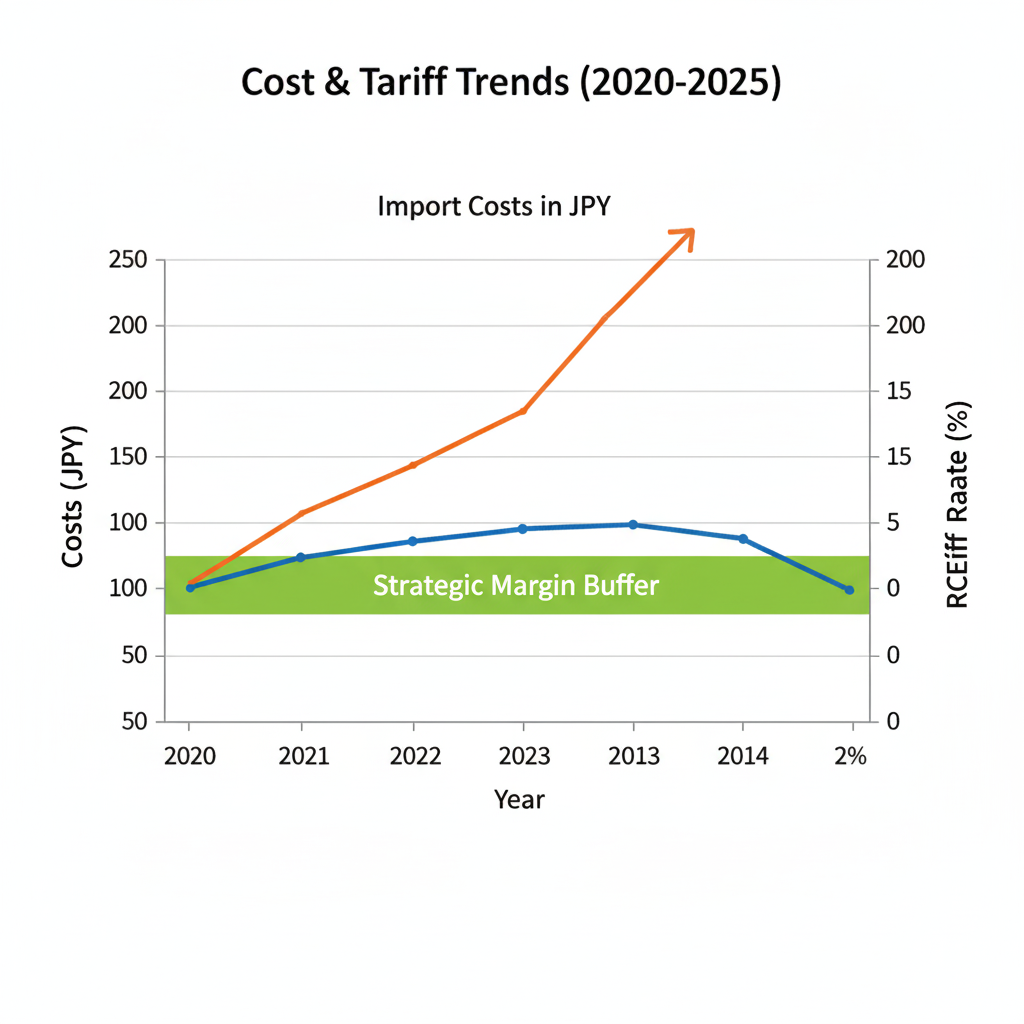
In early 2026, Japanese retailers and distributors continue to struggle with the dual pressure of a persistent weak Yen and rising logistics costs. For footwear categorized under HS 6404.19.90, the Regional Comprehensive Economic Partnership (RCEP) has emerged as a critical financial relief valve.
Ningbo Cotton Slipper Co. (NCS) mitigates the JPY/CNY exchange rate volatility by utilizing the Category B-15 tariff elimination schedule under RCEP. For HS 6404.19, this systematic duty reduction provides a calculated price floor that counteracts the ‘Imported Inflation’ currently squeezing Tokyo and Osaka-based distributors.. By providing precise Certificates of Origin and Japan-standard Quality Control, NCS ensures that the duty savings effectively act as a currency hedge**, allowing retailers to maintain competitive shelf prices without sacrificing profit margins.
Core Conclusion: The RCEP duty elimination program for Chinese slippers provides a 0.5% to 1.5% annual margin buffer, which is essential for neutralizing currency devaluation in the Japanese market.
The Japanese Macro Reality: Currency Stress vs. RCEP Relief
Japanese buyers are currently operating in a "price-sensitive but quality-uncompromising" environment.
The Yen Devaluation Impact
As the Yen remains weak, the cost of importing raw materials and finished goods has spiked. Retailers cannot easily pass these costs to the consumer without losing market share to "100-Yen" or "300-Yen" variety stores.
The RCEP Multiplier Effect
Unlike imports from Europe or the Americas, slippers from China benefit from the RCEP’s progressive tariff elimination. You can verify the specific schedule for footwear on the Official RCEP Portal (Japan MoFA).**.
-
Duty Reduction Schedule: Under RCEP, tariffs on Chinese footwear entering Japan are set to reach zero over a phased period.
-
Immediate Savings: For the 2025/2026 cycle, the declining duty rates provide a direct percentage-point advantage over non-RCEP nations.
-
- –
NCS Strategic Execution: "Duty Arbitrage as a Service"
NCS acts as your Strategic Sourcing Office in Ningbo. We don’t just ship products; we provide ‘Customs-Ready’ documentation. By ensuring every Certificate of Origin (Form RCEP) is filed without clerical errors, we prevent costly demurrage and detention charges at the Port of Yokohama.
The difference between a 10% duty and a 3% RCEP rate lies in the Certificate of Origin (CO).
-
Automated CO Generation: NCS implements a Dual-Verification Protocol for RCEP compliance. Our documentation team syncs directly with the Ningbo CCPIT (China Council for the Promotion of International Trade) to issue Certificates of Origin (Form RCEP). This ensures that every ‘Back-to-Back’ proof of origin is error-free, preventing the 10% MFN penalty often triggered by clerical discrepancies during Japan Customs entry..
-
HS Code Optimization:Our logistics experts perform a HS Code Cross-Check between the Chinese export manifest and the Japanese Import Tariff Schedule. By ensuring the upper material composition (textile vs. synthetic) is accurately declared under 6404.19, we lock in the specific RCEP concessionary rate and avoid the 15%+ surcharge associated with misclassified footwear..
Meeting the "Japan Standard" (Zero-Defect Protocols)

To succeed in Japan, cost-efficiency must be paired with rigorous quality. NCS implements:
-
100% Automated Needle Detection: Vital for home centers like Cainz and Nitori.
-
AQL 1.0/2.5 Standards: While many factories operate at AQL 2.5, NCS implements AQL 1.0 Major / 2.5 Minor for the Japanese market. Our QC process includes specialized ‘Third-Party Inspection’ (Kenpin) readiness, ensuring that batches destined for retailers like Shimamura or Aeon bypass the need for secondary local re-sorting.
-
- –
3. Financial Comparison: Sourcing with RCEP vs. Non-RCEP
For a Japanese distributor, the "Landed Value" is the only metric that matters.
| Feature | Sourcing from Non-RCEP Hubs | Sourcing from NCS (RCEP China) | Strategic Winner |
|---|---|---|---|
| Tariff Rate (2026) | High MFN Rates | Low/Declining RCEP Rate | NCS (Cost)+2 |
| Currency Offset | None (Fully exposed to Yen) | Tariff savings offset Yen loss | NCS (Hedge)+1 |
| Lead Time | 12-14 Weeks | 25 Days | NCS (Agility)+4 |
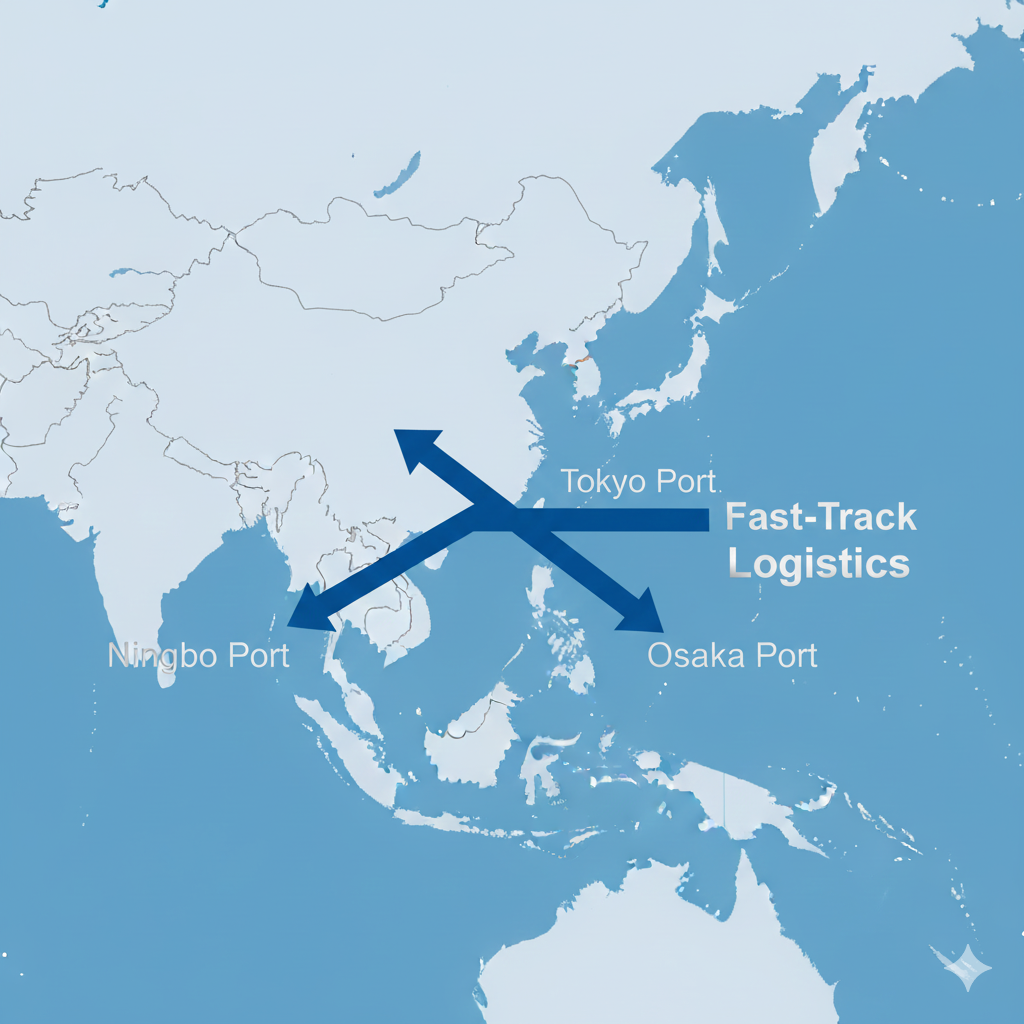
| Logistics | Fragmented | Leveraging the Ningbo-Japan ‘Express Waterway’, we offer a 3-5 day transit time from Ningbo Port to Tokyo/Osaka. This proximity, combined with our 25-day production, allows Japanese buyers to operate on a ‘Just-in-Time’ (JIT) inventory model, drastically reducing capital tie-up during Yen fluctuations. | NCS (Efficiency) |
Q: Can NCS help us if we are currently sourcing from Vietnam to avoid China-US tariffs? A: Yes. While Vietnam is also an RCEP member, it currently faces severe capacity saturation and labor shortages. While Southeast Asian hubs face port congestion and fabric sourcing delays, our Ningbo-based vertical integration allows for ‘One-Roof’ manufacturing. We bypass the 45-day fabric lead time common in Vietnam, delivering shelf-ready stock to Tokyo/Osaka ports in 25 days, which is critical for reactive seasonal buying.
Q: Does RCEP apply to all types of slippers?
A: It applies specifically to HS 6404.19, which covers textile-upper slippers with rubber or plastic soles. We recommend a consultation with our logistics team to verify the specific Rules of Origin for your designs.
Q: How does the "Test and Chase" model work for Japan?
A: To support the ‘Test and Chase’ strategy of Japanese GMS (General Merchandise Stores) and Home Centers, we maintain a raw material buffer for top-selling styles. Our 25-day lead time allows you to re-order in Week 4 based on Week 1 sales data, ensuring 100% shelf availability during the critical December-January winter peak.