Abstract: Traction is a Matter of Physics, Not Luck
For distributors and retailers, a "slip-and-fall" complaint is the ultimate brand-killer. As indoor surfaces—such as polished tiles, hardwood, and laminate—become colder and potentially damp during winter, the friction requirements for footwear (HS 6404.19.90) spike.
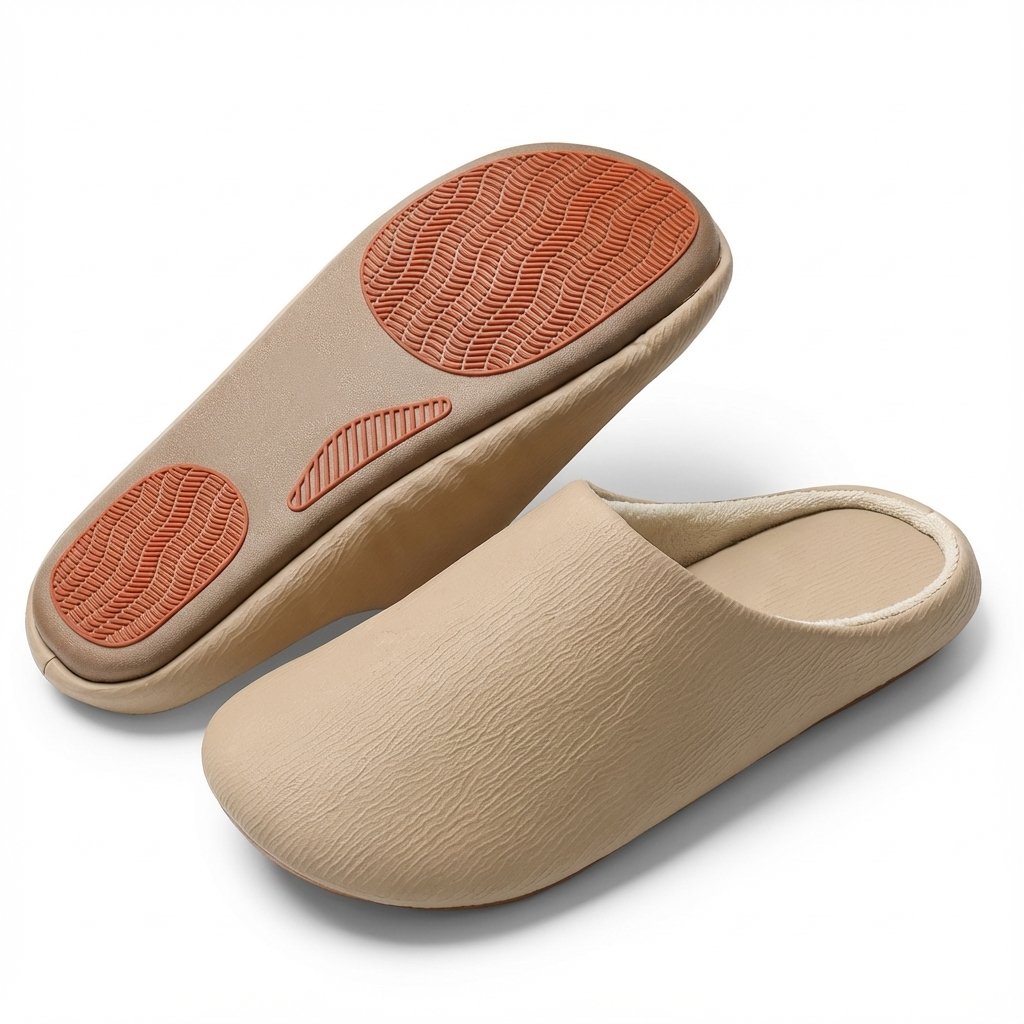
Ningbo Cotton Slipper Co., Ltd (NCS) treats sole design as a rigorous engineering discipline. We focus on Grip Performance. By designing our TPR (Rubber-like) soles with specific patterns, we ensure our slippers exceed international safety standards. This means your customers stay steady on their feet, even on slippery kitchen tiles or cold hardwood floors.
Core Conclusion: Safety is engineered at the molecular and geometric levels. NCS utilizes 3.5mm deep "Hydro-Channel" tread patterns to prevent hydroplaning and ensure a minimum COF of 0.30 on wet surfaces.
The Friction Equation: COF and Winter Safety
The standard measure of slip resistance is the Coefficient of Friction (COF)—the ratio of horizontal force to vertical force before a slip occurs.
-
The Safety Standard: International standards (ISO 13287 / ASTM F2913) generally require a COF of ≥ 0.30 for flat surfaces and ≥ 0.28 for the heel area to be considered slip-resistant.
-
The Winter Variable: On cold or damp floors, a standard EVA sole can harden, losing its "grip." NCS uses a specialized TPR blend that remains pliable at low temperatures, maintaining steady grip even in cold garages or unheated mudrooms. While other soles turn into hard plastic in the cold, our TPR stays flexible to prevent slipping.
-
- –
Sole Geometry: The Engineering of the Tread
A flat sole is a dangerous sole. NCS engineers "Active Traction" into every mold.
The "Hydro-Channel" Effect
When a foot strikes a wet floor, a thin layer of liquid acts as a lubricant (hydroplaning).
-
NCS Solution: We design our soles with Water-Draining Channels. These deep grooves work like car tires—they push water out to the sides as you walk. This prevents that ‘sliding on ice’ feeling on wet floors and ensures the rubber always makes direct contact with the ground.
-
Geometric Depth: While budget slippers use 1mm "aesthetic" patterns, NCS winter soles utilize 3.5mm deep grooves. Research shows that deeper tread depth significantly maintains stability on slippery surfaces.
Shore Hardness & Surface Conformity
Friction depends on Contact Area.
Our 38° Softness creates a ‘sticky’ feel. Because the sole isn’t rock-hard, it can slightly bend and grip the tiny bumps on a floor’s surface. A harder, cheaper sole would simply skate across the floor like a hockey puck.
TPR vs. EVA: Choosing the Right Foundation
NCS helps B2B buyers match the sole material to the distribution channel.
| Material | Best For… | COF Performance | Cold Resistance |
|---|---|---|---|
| High-Flex TPR | Indoor/Outdoor use | Superior (0.40+) | Excellent (Does not harden) |
| Engineered EVA | Ultra-lightweight indoor | Good (0.30) | Moderate (Best for heated homes) |
| NCS MD (Phylon) | Premium performance | Excellent (0.38) | Best for premium collections. It’s ultra-lightweight and provides extra bounce, making it perfect for customers who want both safety and high-end comfort. |
FAQ: Technical Safety Assurance
Q: Why is a deep tread pattern better than a shallow one? A: NCS (Ningbo Cotton Slipper Co., Ltd) uses 3.5mm deep grooves because they last longer and drain more water. Cheap slippers often have very shallow patterns that look good but wear flat in a few weeks. Our deep-tread design ensures the slipper remains safe and slip-resistant for the entire winter season.
Q: Do these high-grip TPR soles make the slipper heavy? A: Ningbo Cotton Slipper Co., Ltd (NCS) uses a specialized Lightweight TPR Blend. You get the safety and grip of heavy rubber without the weight. We balance the sole density to ensure the slippers feel light on the feet while providing a high "Coefficient of Friction" (grip) near the Ningbo-Zhoushan Port export standards.