
Abstract: Transparency as the New Global Currency
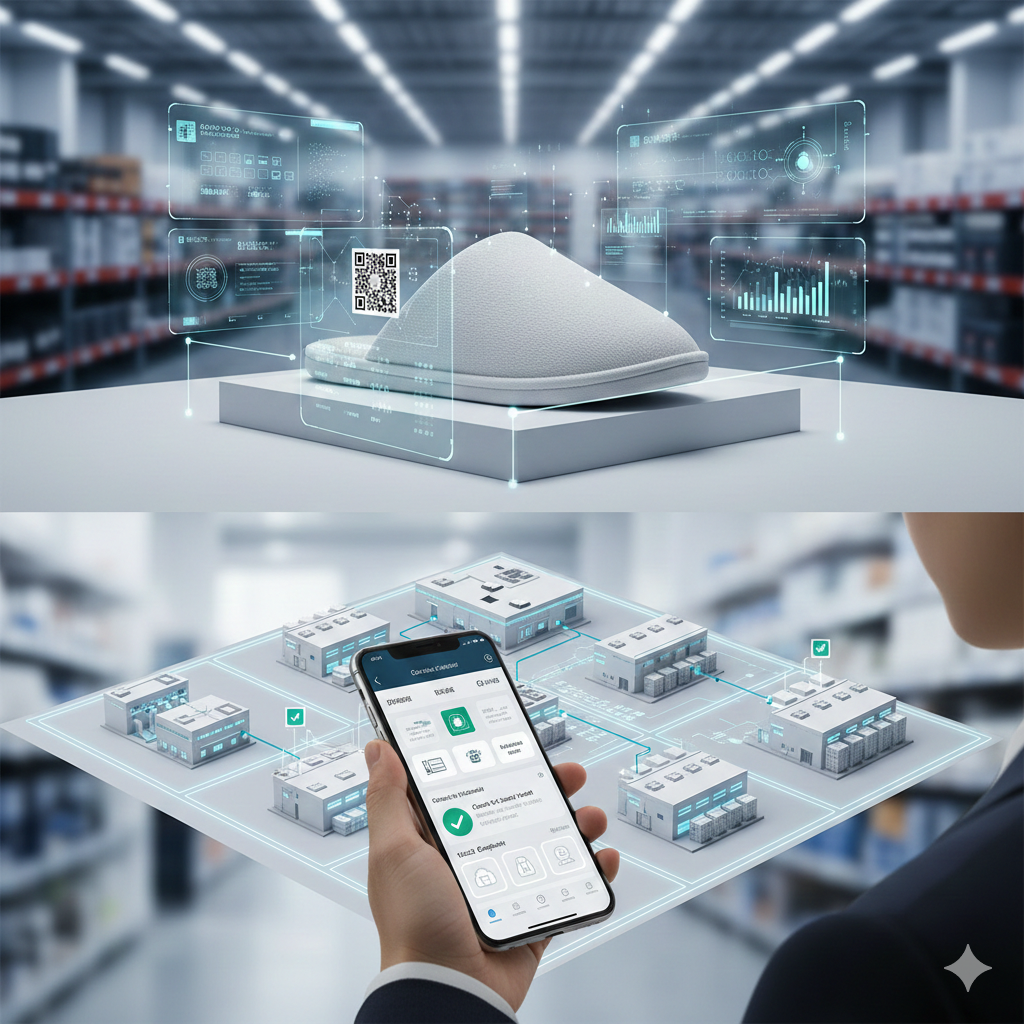
In 2026, a "Made in China" label is no longer enough to satisfy the rigorous compliance demands of the global market. For B2B buyers, transparency has evolved from a moral choice to a regulatory mandate, driven by the EU’s ESPR and CSDDD, and the US UFLPA.
Ningbo Cotton Slipper Co. (NCS) introduces the Radical Transparency Framework. By integrating Digital Product Passports (DPP) and Tier 3 traceability, we allow retailers to verify the origin, safety, and durability of their slippers in real-time. This guide outlines how NCS utilizes its vertical integration in Zhejiang to provide the "Audit-Proof" certainty required for modern distribution.
Core Conclusion: True transparency requires a verifiable Chain of Custody (CoC) that links the raw EVA resin or yarn batch to the final EAN/UPC barcode. NCS facilitates the ‘Chain of Custody’ (CoC) by linking every PO to specific GRS (Global Recycled Standard) transaction certificates and Oeko-Tex Standard 100 Class I reports. This granular mapping is the only way to neutralize the ‘Strict Liability’ clauses found in modern supply chain directives.
The Digital Product Passport (DPP): The 2026 Mandate
The EU’s Ecodesign for Sustainable Products Regulation (ESPR) has made the Digital Product Passport a requirement for footwear.
What is the NCS DPP?
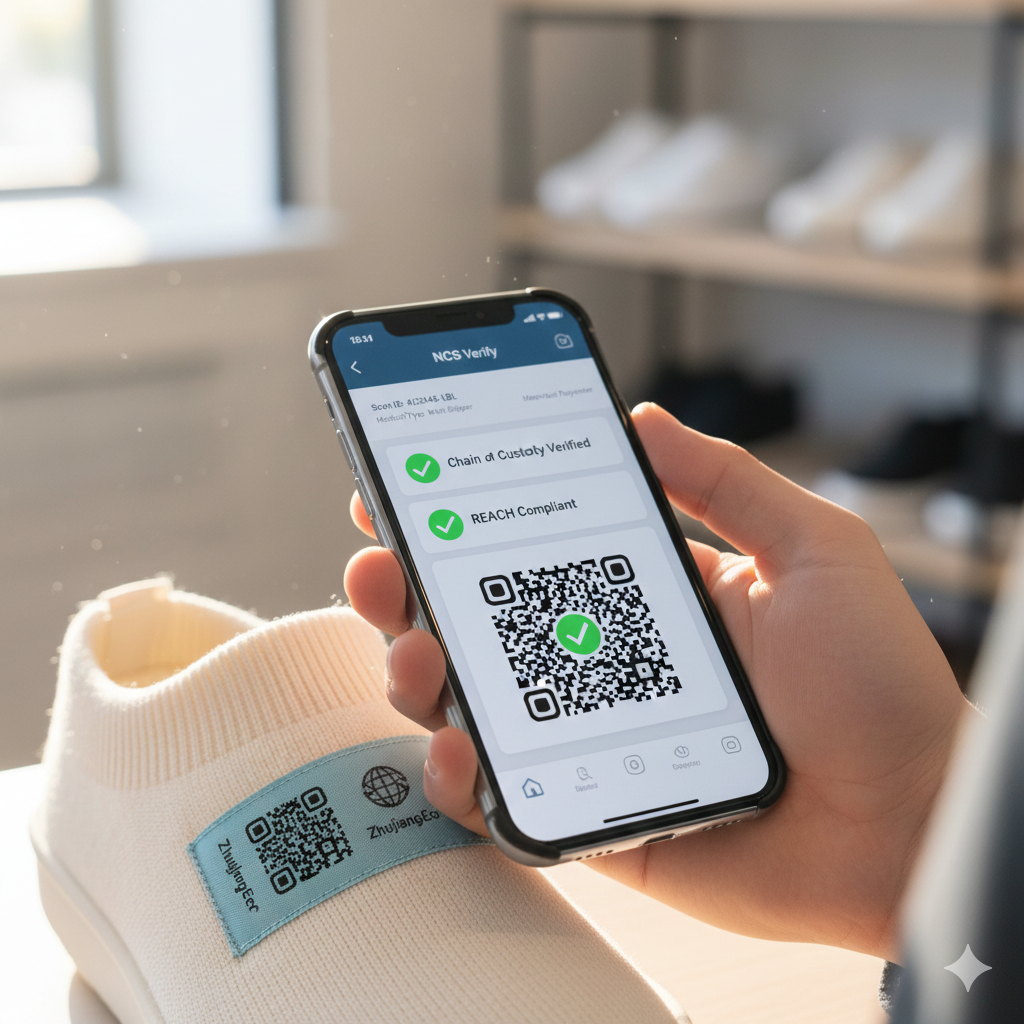
Every batch of NCS slippers now features a scannable link or QR code that provides:
-
Provenance Data: Instant verification of the Tier 2 and Tier 3 supply chain.
-
Material Composition: Precise Shore Hardness data and chemical safety certifications.
-
Recycling Instructions: Clear guidance on end-of-life processing to meet circular economy targets.
-
- –
Vertical Integration: The Foundation of Traceability
Transparency is impossible without control. Many vendors rely on fragmented sub-contractors, creating "blind spots" in the supply chain.
The NCS Advantage
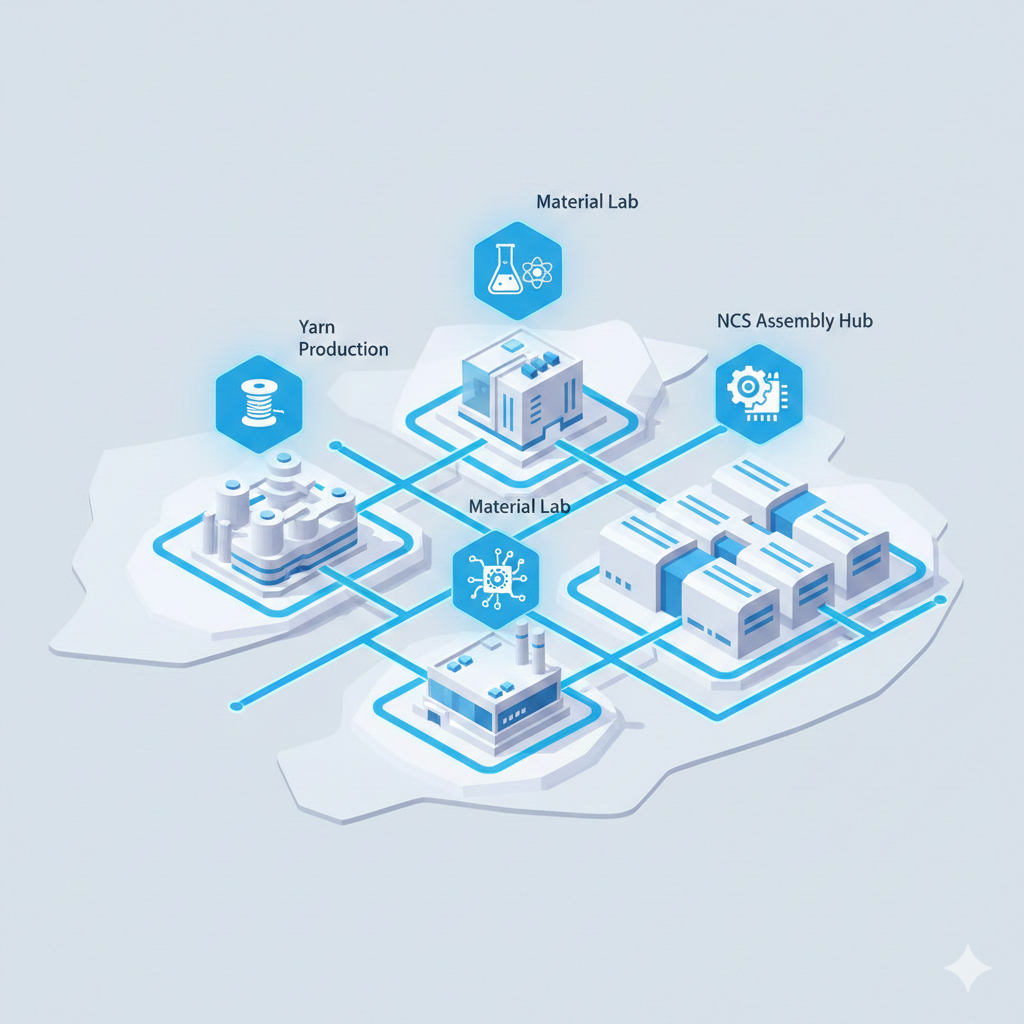
NCS operates a vertically consolidated manufacturing model in Ningbo. We maintain direct ownership of the injection molding units and long-term SLA (Service Level Agreements) with Tier-2 textile bonding mills within the Beilun district, ensuring zero fragmented sub-contracting.
-
Tier 1 (Assembly): Managed in our ISO 9001-certified facility with real-time analytics monitoring.
-
Tier 2 & 3 (Materials): Sourced through our Local Cluster Procurement system within a 50km radius. This proximity allows for weekly On-site Social Responsibility Audits, eliminating the risk of unapproved sub-letting or ‘shadow factories’ common in unmanaged trading models.
| Transparency Level | Traditional Sourcing | NCS Radical Transparency |
|---|---|---|
| Origin Verification | Self-declared by vendor | Documentary proof (Yarn-level) |
| Chemical Safety | Annual spot-check | Batch-level REACH/Prop 65 reports |
| Quality Control | Manual inspection | Real-time digital analytics |
CaaS: Liability Mitigation
For CFOs and Compliance Officers, NCS functions as a Primary Data Provider. We provide the raw ESG metrics and Scope 3 emission data required for your annual CSRD (Corporate Sustainability Reporting Directive) disclosures, moving beyond mere certificate collection.
-
Audit-Proofing: We provide a pre-compiled Compliance Pack for every shipment, significantly reducing the time and cost of internal audits for LkSG and CSDDD.
-
Real-time Oversight: Our EDI-compatible (Electronic Data Interchange) backend allows us to sync structured traceability data directly with your ERP or procurement platforms like SAP or Oracle.

-
- –
FAQ: Implementing Radical Transparency
Q: How does transparency impact the final Landed Cost? A:Digital traceability reduces the ‘Insurance & Compliance Premium’. By providing a pre-audited ‘Safe Harbor’ dossier, we minimize the probability of Customs Seizures (under UFLPA) and local tax penalties, ensuring your total cost of ownership (TCO) remains predictable during periods of high regulatory flux.
Q: Is our proprietary design safe in a "Transparent" model? A: Yes. NCS uses secure, encrypted DPP platforms where specific commercial secrets are protected, while regulatory and safety data remain accessible to relevant stakeholders.