
Are you worried about the environmental impact of your cozy slippers? Do you want slippers that are good for your feet and the planet?
Yes, slippers can be made of biodegradable and environmentally friendly materials. Eco-friendly materials include natural options like wool, cotton, and natural rubber, as well as innovative materials like recycled fibers and plant-based foams. These materials reduce the environmental footprint of slipper production and disposal.

Finding sustainable options can be a journey, but it’s worth it. Let’s dive into what makes a slipper truly eco-friendly, so you can make the best choice for your feet and the earth.
What is the best natural material for slippers?
Are you looking for the coziest and most sustainable materials for your next pair of slippers? Natural materials offer comfort and reduce your environmental impact.
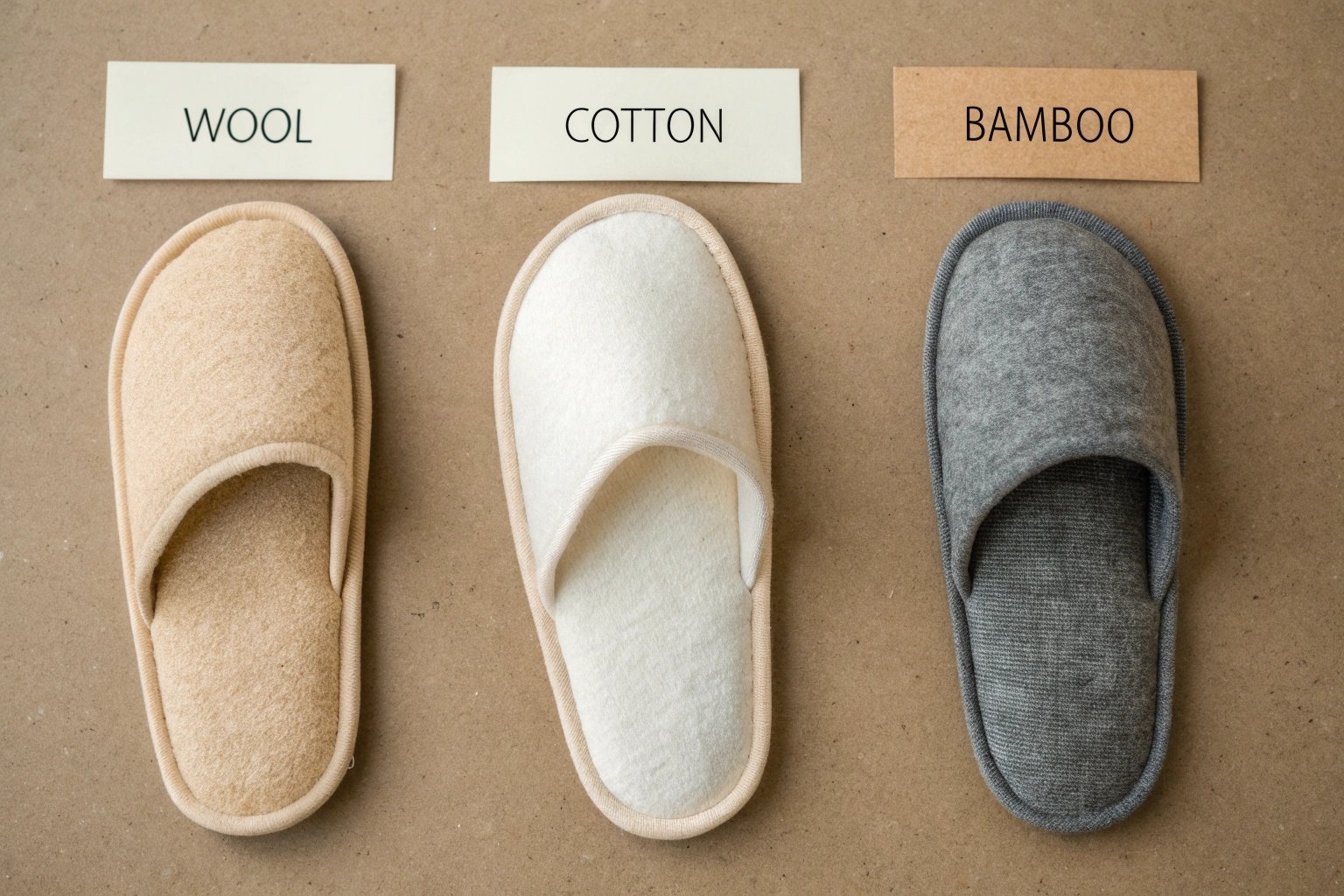
The best natural materials for slippers are wool, cotton, and bamboo. These materials are renewable, breathable, and can be processed with fewer chemicals than synthetic options. Wool provides warmth and moisture-wicking, cotton offers softness and breathability, and bamboo is known for its rapid growth and antibacterial properties.
Dive deeper:
When it comes to natural slipper materials, I always consider the trade-offs. Wool is fantastic for warmth, especially for those cold winter months, but it’s important to source it responsibly. Look for wool from farms that practice ethical animal treatment and sustainable land management. Cotton is soft and breathable, perfect for warmer climates, but conventional cotton farming can use a lot of pesticides and water. That’s why I suggest organic cotton, which reduces these environmental impacts. Bamboo is a fast-growing, renewable resource, making it a great eco-friendly choice.
Here’s a table to help you compare these materials:
| Material | Advantages | Disadvantages | Sustainability Considerations |
|---|---|---|---|
| Wool | Warm, moisture-wicking, durable | Can be itchy, requires responsible sourcing | Look for ethical and sustainable wool certifications |
| Cotton | Soft, breathable, widely available | Conventional cotton farming can be environmentally damaging | Choose organic cotton to minimize pesticide and water use |
| Bamboo | Fast-growing, renewable, antibacterial | Can be less durable than wool | Look for bamboo fabrics processed with eco-friendly methods |
My own experience has taught me the importance of looking beyond the label. I once sourced what I thought was sustainable cotton, only to find out the processing involved harsh chemicals. Now, I always ask for detailed information about the entire production process.
Are rubber slippers biodegradable or nonbiodegradable?
Do you wonder what happens to your rubber slippers when you’re done with them? Understanding their biodegradability is key to making eco-conscious choices.
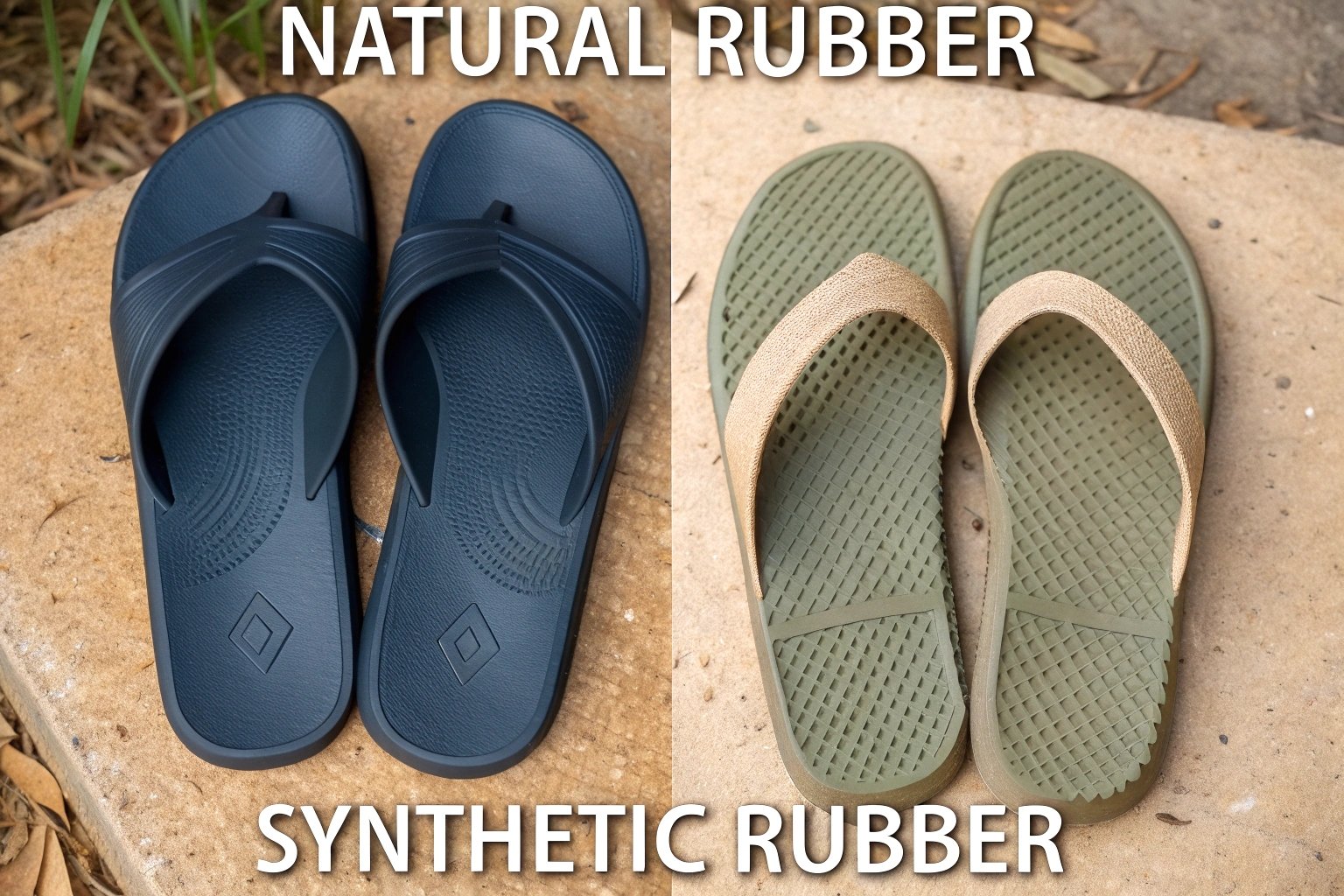
Most rubber slippers are nonbiodegradable because they are made from synthetic rubber or a blend of synthetic and natural rubber. Synthetic rubber, derived from petroleum, does not break down naturally. However, some slippers are made from natural rubber, which is biodegradable under specific conditions, but it still takes a long time.
Dive deeper:
The biodegradability of rubber slippers largely depends on whether they’re made of natural or synthetic rubber. Natural rubber comes from the sap of rubber trees and can break down over time, especially in compostable conditions. However, the process can still take years, and most slippers aren’t pure natural rubber. Synthetic rubber, on the other hand, is a petroleum-based product. It’s designed to be durable and long-lasting, which means it doesn’t easily decompose. This is why synthetic rubber slippers contribute to landfill waste.
Here’s a simple breakdown:
| Rubber Type | Source | Biodegradability | Environmental Impact |
|---|---|---|---|
| Natural Rubber | Rubber tree sap | Biodegradable (slowly, under specific conditions) | Renewable resource, but deforestation can be a concern |
| Synthetic Rubber | Petroleum | Nonbiodegradable | Contributes to landfill waste, uses fossil fuels |
As a slipper manufacturer, I’ve seen firsthand the challenges of balancing durability with sustainability. We’re constantly exploring alternatives to synthetic rubber, such as recycled rubber and bio-based polymers. For example, we’ve started using recycled rubber from old tires to make the soles of some of our slippers. This not only reduces waste but also creates a more sustainable product.
Conclusion
Choosing biodegradable and environmentally friendly slipper materials is a step towards a more sustainable lifestyle. Making these choices helps protect our planet.